finance
billing consolidation
Financial operations are spread across tools, reports, and people. In consulting firms, billing procedures can often be detail-oriented and client-specific, while also tedious and repetitive. By funneling disparate accounting information into one place, on a schedule, tasks become solely review-based. Time is no longer wasted comparing multiple reports against several dashboards and manually typing out billing directives. Financial review stops being a convoluted assembly, and instead becomes high-level assessment that prompts immediate decision-making.
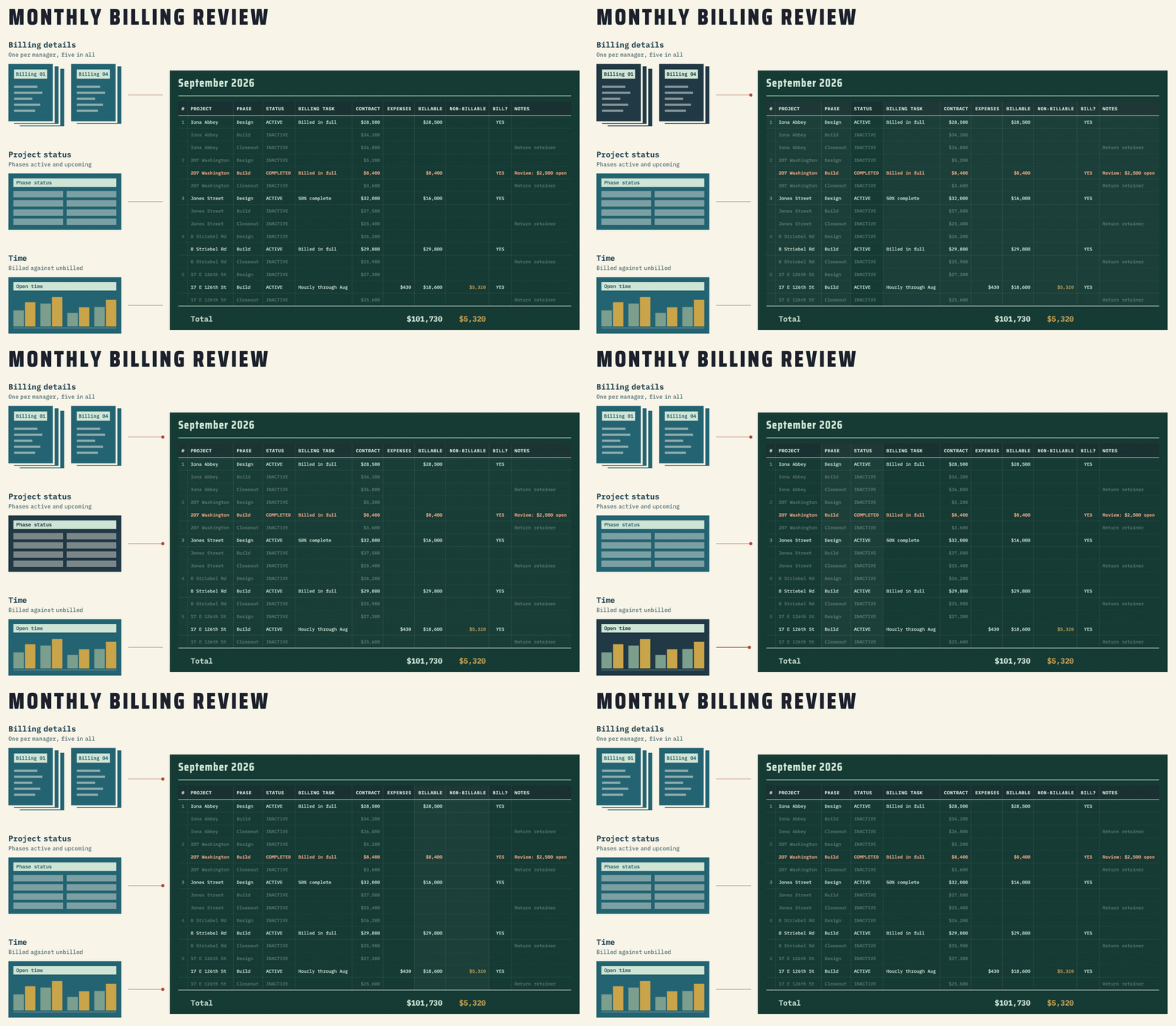
For this company, I automated monthly billing and reconciliation for project managers. Prior to this, PMs were pulling data from multiple sources and sending inconsistent patchwork information for accounting to decipher. Now, scripts call the project management platform's API and pull each manager's customized billing details report, along with live dashboards for project status and billed and unbilled time.
The data is assembled into one sheet per manager and includes active projects, active or upcoming phases, and contract amounts. Billable and non-billable time is highlighted and totaled. Each row is read against written and programmed rules that assign an automated billing task. Anomalies are flagged for closer inspection. Routine project billing and items requiring managerial review are concisely displayed in one easy-to-use, cohesive document.